Modular Kitchen vs Carpenter-Made Kitchen: What Costs More Long-Term
This is one of the most common questions we get at the very start of a project, usually from someone who’s gotten a much cheaper quote from a local carpenter and is wondering if a modular kitchen is really worth the extra cost. The honest answer: it depends on your time horizon. Here’s the real comparison, not the sales pitch version.
Upfront Cost: Carpenter Usually Wins
A local carpenter can often build a basic kitchen for less than factory-made modular units, mainly because they’re using site-fabricated shutters, standard plywood, and basic hinges/channels rather than engineered boards and branded hardware. If your budget is genuinely tight and you plan to renovate again in a few years anyway, this can be a reasonable short-term choice.
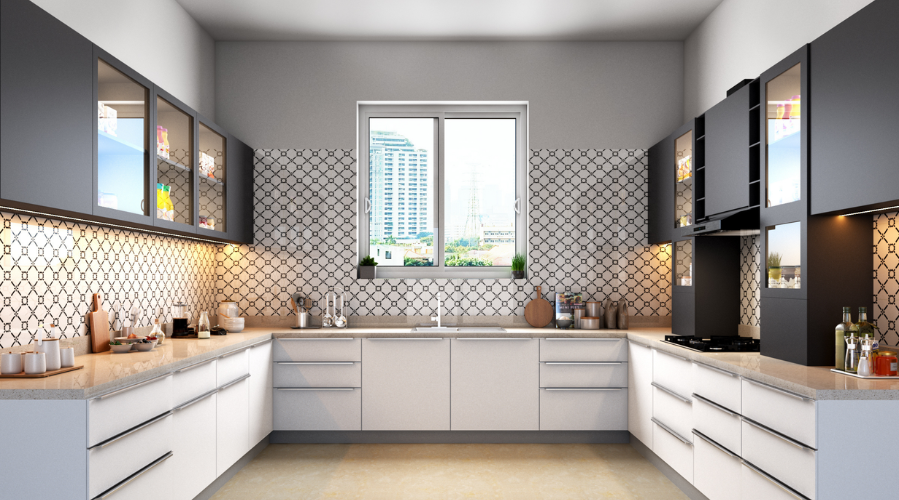
For reference, our modular kitchens start at ₹1,600/sq.ft see the full pricing breakdown for what’s included at that rate (moisture-resistant boards, soft-close mechanisms, German/Italian hardware, 1-year warranty).
Where Modular Pulls Ahead: Durability & Finish
- Moisture resistance. Mumbai’s humidity is hard on site-built plywood joints over time. Factory-finished modular units use pre-laminated, moisture-resistant boards (often BWR or marine-grade) that are less prone to swelling and delamination at joints.
- Precision and finish consistency. Machine-cut panels and factory edge-banding give a cleaner, more consistent finish than hand-cut site work this shows up most in drawer alignment, shutter gaps, and how flush surfaces sit over time.
- Hardware quality and lifespan. Soft-close hinges and channels from established hardware brands typically outlast basic hardware by several years, and are easier to source replacement parts for later.
- Space optimization. Modular systems (tandem baskets, pull-out units, corner solutions) are engineered for exact measurements in a way that’s harder to replicate with standard carpentry, especially in compact Mumbai kitchens.
Where Carpenter-Made Can Actually Be Better
If you need highly unusual dimensions, a very tight budget, or fast turnaround for a rental property where longevity matters less, a good local carpenter is a legitimate option — not everything needs to be modular. The honest trade-off is: you’re accepting more variability in finish quality and durability in exchange for lower upfront cost and more flexibility on unusual layouts.
The Real Long-Term Math
Over a 7-10 year horizon, a well-specified modular kitchen interior design typically needs less repair (hinge replacement, panel swelling repair, shutter realignment) than a carpenter-built one exposed to the same humidity and daily use. If you’re planning to stay in the home long-term, the total cost of ownership often narrows the initial price gap significantly sometimes modular ends up cheaper once you account for repairs and part replacements on the carpenter-built option.
What Ongoing Maintenance Actually Looks Like for Each
Modular kitchens generally need very little beyond periodic cleaning and occasional hinge lubrication. Because hardware is from established brands, replacement parts (a specific hinge model, a channel, a handle) are usually easy to source years later, and installation is straightforward since everything is built to standard specifications.
Carpenter-built kitchens can require more attention over time shutters may need reworking if they warp slightly with humidity, and since hardware is often sourced locally without a consistent brand, finding an exact replacement part years down the line can mean re-fitting something slightly different, which sometimes affects how smoothly drawers or doors operate afterward.
Neither is a dealbreaker, but it’s worth factoring into your decision if you’re the type of homeowner who’d rather avoid periodic touch-ups altogether versus someone comfortable calling a local carpenter back in for the occasional adjustment.
Questions to Ask Before Deciding Either Way
Regardless of which direction you’re leaning, these questions will clarify the real trade-off for your specific situation:
- How many years do you plan to stay in this home? A shorter horizon shifts the math toward whichever option is cheaper upfront; a longer one favours durability.
- What plywood grade and hardware brand is actually being used by the carpenter, and by any modular firm you’re comparing? Get this in writing either way.
- Is there a warranty, and does it cover hardware, workmanship, or both? Site-built carpentry rarely comes with a formal warranty the way factory-finished modular work does.
- How unusual is your kitchen’s layout? Very tight corners, non-standard wall angles, or unusual pipe/duct positions sometimes favour custom carpentry’s flexibility over standardized modular dimensions.
Where We Land on This
If you’re staying in the home for the medium-to-long term and want consistent finish quality with less ongoing maintenance, modular is generally the more reliable choice which is why it’s our default recommendation for most Virar homeowners. But if your layout is genuinely unusual or your budget is the tightest constraint, we’ll say so honestly rather than push modular by default. If you’re unsure which makes sense for your specific kitchen size and budget, our team can walk you through both options with real quotes side by side book a free consultation and we’ll show you the numbers, not just push modular by default.
If you’re unsure which makes sense for your specific kitchen size and budget, the Richwood Interio team can walk you through both options with real quotes side by side book a free consultation and we’ll show you the numbers, not just push modular by default.
Explore Richwood Interio’s Modular Kitchen Solutions → See Richwood Interio’s Full Pricing →
Frequently Asked Questions
Usually yes, upfront but the gap narrows or reverses over 7-10 years once you factor in repairs, hinge/hardware replacement, and moisture damage that's more common with site-built carpentry.
Generally yes. Moisture-resistant boards used in factory-finished modular units hold up better against humidity-related swelling and joint delamination than standard site-built plywood.
Partially a skilled carpenter can use better boards and hardware, but factory precision (machine-cut panels, consistent edge-banding) is difficult to replicate entirely with hand-built site carpentry.
Our modular kitchen package includes a standard 1-year warranty covering workmanship and hardware ask any firm for their specific warranty terms in writing.
Yes for very tight budgets, rental properties, or highly unusual layouts where factory modules don't fit well, a good local carpenter can be a practical, reasonable option.