Smart Home Integration: Automating Your Interior Design
A few years ago, smart homes felt like a futuristic add-on reserved for tech enthusiasts. Today, smart home interior design is becoming a standard request in nearly every new project — homeowners want lighting, curtains, and security that respond to a tap on their phone, not just a switch on the wall.
At Richwood Interio, we now build automation planning directly into our home interiors and turnkey interior projects, rather than treating it as an afterthought once the design is finalised. Here’s how to think about smart home interior design for your own space.
Why Smart Home Integration Is Growing in India
Rising smartphone adoption, more affordable smart devices, and a growing focus on convenience have made smart home interior design far more accessible than it was even a couple of years ago. What used to require complex wiring and expensive hubs can now often be retrofitted using Wi-Fi-based devices that don’t need major civil work.
Core Elements of Smart Home Interior Design
1. Smart Lighting
Automated lighting is usually the easiest and most impactful starting point for smart home interior design. Dimmable smart bulbs, scene-based lighting (movie mode, dinner mode, work mode), and motion-sensor lights in passageways or bathrooms add both convenience and energy savings.
2. Smart Switches and Panels
Retrofit smart switch panels let you control existing lights and fans via an app or voice assistant without rewiring the entire home — ideal for renovation projects rather than new construction.
3. Automated Curtains and Blinds
Motorised curtain tracks that open and close on a schedule or voice command are increasingly popular in living rooms and bedrooms, adding a genuinely premium feel to a space.
4. Smart Security
Video doorbells, smart locks, and app-connected CCTV give homeowners remote visibility and control — particularly valuable for families with domestic help or elderly parents at home.
5. Climate and Appliance Control
Smart AC controllers and app-connected appliances allow you to pre-cool a room before arriving home or monitor energy usage patterns over time.
Designing Around Smart Home Technology
Good smart home interior design isn’t just about adding gadgets — it’s about planning your interiors so the technology fits in seamlessly rather than looking bolted on. This means:
- Concealed wiring paths planned during the false ceiling and electrical stage
- Wall-mounted control panels positioned at accessible, uncluttered points
- Speaker and sensor placement considered during the 2D & 3D design phase, not after furniture is already placed
Our architectural projects team plans electrical layouts with automation in mind from day one, which avoids the messy retrofitting many homeowners face when smart features are added after the interiors are complete.
Smart Home Ideas by Room
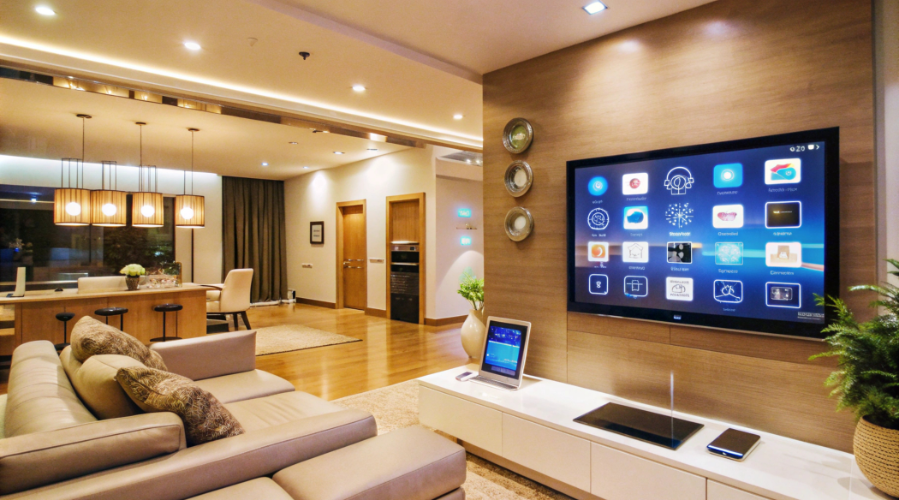
- Living room – scene-based lighting, motorised curtains, and a smart TV setup work well alongside our living room design planning
- Bedroom – smart lighting with sleep/wake scenes and app-controlled AC scheduling
- Kitchen – smart chimney controls and app-connected appliances, especially relevant for modular kitchens
- Entryway – video doorbell and smart lock for secure, keyless access
Budgeting for Smart Home Features
Smart home interior design doesn’t need to be an all-or-nothing decision. Most homeowners start with lighting and security, since these offer the highest daily convenience for the lowest investment, then expand into curtains and climate control over time as budgets allow.
How Richwood Interio Approaches Smart Home Design
Every smart home recommendation we make starts with understanding your daily routine and which conveniences matter most to you — rather than pushing every available gadget into the plan. Our architect-led team integrates the necessary wiring and panel points into your interior design from the planning stage, so your home looks polished, not retrofitted. You can see how we’ve incorporated modern technology into full home layouts in our portfolio.
Final Thoughts
Smart home interior design is no longer a luxury reserved for tech-first households it’s becoming a practical, everyday upgrade that adds real convenience to modern living. Whether you start with just smart lighting or plan a fully automated home, the key is integrating the technology thoughtfully into your overall interior design. Ready to plan a smarter home? Schedule a free consultation with our team.
Frequently Asked Questions
It's the integration of automated lighting, security, climate control, and other smart devices into a home's interior planning for added convenience and efficiency.
Costs vary widely Wi-Fi-based smart switches and bulbs are affordable, while fully automated systems with hubs and sensors cost more.
Yes, many smart devices like smart switches, bulbs, and locks can be retrofitted without major renovation or rewiring.
Smart lighting and smart switches are usually the easiest and most affordable starting point for home automation.
Most smart home devices rely on Wi-Fi or a dedicated hub to connect and be controlled via an app or voice assistant.
Yes, reputable smart locks offer strong encryption and backup access methods, making them a secure alternative to traditional locks.
Yes, features like motion-sensor lighting, scheduled AC control, and energy usage tracking can meaningfully reduce electricity consumption.
It's a lighting setup where multiple bulbs adjust together to preset moods, such as "movie mode" or "dinner mode," triggered by a single tap or voice command.
Yes, planning concealed wiring and panel points during the electrical and false ceiling stage avoids messy retrofitting later.
An experienced interior design firm like Richwood Interio can plan your electrical layout and furniture placement around smart home requirements from the start.