Bedroom Ceiling Design Ideas (2026): Modern False Ceiling & Lighting Designs
The bedroom ceiling is the one surface you look at more than any other in your home last thing before sleep, first thing on waking yet it’s usually the most overlooked part of a bedroom interior. A well-planned bedroom ceiling design does more than fill empty space overhead; it shapes how calm, warm, or premium the entire room feels. In 2026, this approach has shifted away from heavy, multi-tier structures toward simpler forms with smarter, layered lighting.
This guide covers the bedroom ceiling design ideas worth considering this year, along with lighting choices, materials, and practical tips for getting the proportions right.
Why the Ceiling Deserves as Much Planning as the Walls
Most homeowners plan wardrobes, wall colours, and flooring in detail, then treat the ceiling as an afterthought handled at the end of the project. This is a missed opportunity a thoughtful bedroom ceiling design can make a room feel taller, add warmth through lighting, and conceal wiring or ductwork cleanly. Since the ceiling is rarely blocked by furniture, it’s also one of the few surfaces in a bedroom that’s always fully visible, making it worth the same level of planning as your wall paint design or wardrobe layout.
Modern False Ceiling Styles for 2026
Minimalist single-tier design: A clean, low-profile perimeter border in gypsum or POP, often just 4–6 inches deep, replacing the heavier multi-layer designs that were common a few years ago. This remains the most requested style for a false ceiling design for bedroom spaces in 2026.
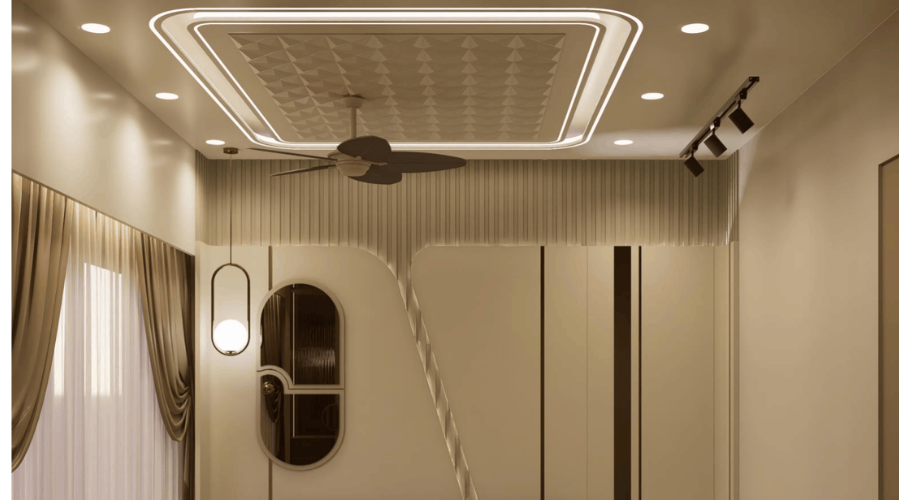
Floating ceiling panels: A recessed centre panel with a shadow gap and hidden LED strip lighting around the edge, creating a “floating” visual effect without adding bulk to the room.
Wooden and wood-textured panels: Warm wood-tone battens or laminate panels, either as a full ceiling treatment or a partial accent over the bed, pairing well with 2026’s broader shift toward warm, earthy interiors.
Curved and organic forms: Soft, rounded ceiling edges instead of sharp geometric steps a subtle but noticeable move away from the boxy, layered POP ceilings of the past decade.
Exposed and semi-finished ceilings: In some contemporary bedrooms, designers are leaving sections of the ceiling minimally finished with painted conduit and exposed texture, paired with statement pendant lighting a more industrial take on the space overhead.
Lighting: The Real Driver of a Good Bedroom Ceiling Design
Lighting has become just as important as the ceiling structure itself, and in many 2026 projects, it’s the primary reason a ceiling feels premium rather than basic.
- Cove lighting — concealed LED strips along the ceiling’s edge, providing soft, indirect light that’s ideal for a bedroom’s relaxed mood
- Layered lighting zones — separate circuits for ambient ceiling light, a reading light near the bed, and accent lighting, controlled independently rather than a single central switch
- Warm-white LEDs (2700K–3000K) — replacing cooler white lighting, which tends to feel clinical rather than restful in a bedroom
- Statement pendant or chandelier lighting — used sparingly as a focal point above the bed or seating nook, rather than as the room’s only light source
A ceiling design built around layered, warm lighting will generally feel more finished than one relying purely on structure and paint.
Choosing the Right Bedroom Ceiling Design for Your Room
- Check your ceiling height first. Rooms under 9 feet generally suit a minimalist single-tier design anything heavier can make the room feel lower and more closed in.
- Match the ceiling to your wardrobe and wall finish, rather than designing it in isolation a busy wardrobe design paired with a heavily patterned ceiling can make a small bedroom feel cluttered.
- Plan wiring and lighting circuits early. Cove lighting and zoned lighting need to be planned during the electrical stage, not added after the false ceiling is finished.
- Keep master bedroom ceiling design calmer than common areas. Save bolder, more elaborate ceiling treatments for the living room, and keep bedroom ceilings simpler and more restful.
- Consider material and maintenance, not just appearance gypsum board is lightweight and easy to repair, while POP offers finer detailing but is harder to modify later.
Bedroom Ceiling Design vs Living Room Ceiling Design
Bedroom ceiling design typically stays simpler and more restrained than living room and hall ceiling design, which can afford bolder multi-tier structures and statement lighting since it’s a space meant to impress guests. Bedrooms benefit more from calm, warm, low-profile designs that support rest rather than draw constant visual attention.
What Does Bedroom Ceiling Design Cost?
False ceiling cost for a standard bedroom typically ranges from ₹35–55 per sq ft for a basic single-tier gypsum design, up to ₹80–120 per sq ft for designs with integrated cove lighting and wooden accents. For a full room-wise breakdown, see our interior design cost guide.
Conclusion
A well-planned bedroom ceiling design brings together structure, material, and lighting to create a room that feels genuinely restful rather than just decorated. In 2026, the direction is clear — simpler forms, warmer light, and details that support how the room is actually used, not just how it photographs.
Richwood Interio‘s design team plans bedroom ceiling design alongside your wardrobe, wall finish, and electrical layout from day one, so every element works together. Book a free consultation to explore ceiling and lighting options suited to your bedroom.
Frequently Asked Questions
Minimalist single-tier false ceilings with concealed cove lighting are the most requested bedroom ceiling design in 2026, replacing the heavier multi-layer POP designs of previous years.
No — a false ceiling is optional and works best in rooms with adequate ceiling height (generally above 9 feet) or where you want to conceal wiring, ducting, or add layered lighting.
A minimum of 9 feet is recommended before adding a false ceiling, since most designs reduce room height by 4–8 inches depending on complexity.
Gypsum board is generally preferred for bedrooms because it's lightweight, quicker to install, and easier to repair or modify later compared to POP, which offers finer detailing but is more rigid.
Cove lighting typically adds ₹150–300 per running foot depending on the LED profile and control system used, making it one of the more affordable ways to upgrade a basic ceiling design.
Yes — false ceilings can generally be added to an existing bedroom without structural changes, though electrical wiring for lighting should be planned before installation begins.
Warm white or soft off-white remains the most popular bedroom ceiling colour, though some 2026 designs pair a warm-toned wood ceiling accent with a lighter surrounding finish for contrast.
Wood-textured laminate panels are generally more practical than solid wood in humid coastal climates, offering the same warm look with better moisture resistance.
A standard bedroom false ceiling with basic lighting usually takes 4–7 days to install, depending on design complexity and whether electrical work is done simultaneously.
False ceilings can slightly improve insulation and reduce heat gain from the roof slab, though this effect is modest compared to proper wall insulation or window treatments.
Yes — most bedroom ceiling designs are planned around a central opening or offset panel to accommodate a ceiling fan, so this should be factored into the design layout early.
Cove lighting refers specifically to concealed LED strips built into a recessed ceiling edge for indirect illumination, while false ceiling lighting more broadly includes any light source integrated into the ceiling structure, including spotlights and panel lights.