Bathroom Design Ideas for Indian Homes: Modern, Small & Luxury Bathroom Interiors
For years, the bathroom was the room homeowners finished last, budgeted least for, and styled purely around whatever tiles were on sale. That’s changing fast. Good bathroom design is now treated as seriously as the kitchen or living room, with Indian homeowners investing in better storage, layered lighting, and finishes that actually hold up to daily use.
This guide covers practical bathroom design ideas for 2026 from compact apartment bathrooms to full luxury makeovers along with the details most homeowners overlook until it’s too late to fix cheaply.
Why Bathroom Design Deserves More Attention Than It Gets
A bathroom is used multiple times a day by everyone in the household, yet it’s often the smallest room with the least design planning. Poor planning here shows up in small daily frustrations inadequate storage, harsh overhead-only lighting, or tiles that look dated within a few years. Getting the layout, ventilation, and finishes right the first time also matters more here than in most rooms, since bathroom renovations involve plumbing and waterproofing, making changes far more disruptive later than in a bedroom or living room.
Modern Bathroom Design Trends for 2026
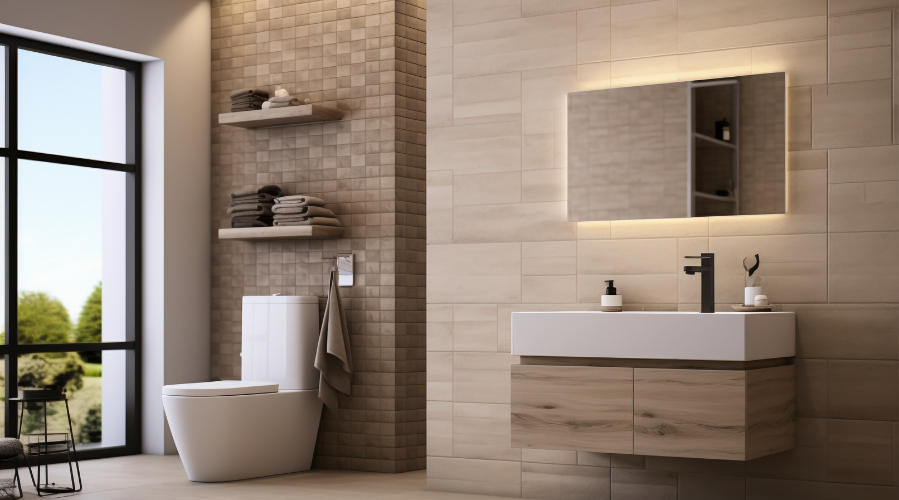
Warm, matte finishes over cold, glossy ones — matte tiles in warm beige, sand, and soft terracotta tones are replacing the cool grey and high-gloss white bathrooms that dominated the last decade, echoing the broader warm-minimalism shift seen across Indian interiors.
Walk-in showers over bathtub-shower combos — space-efficient, easier to clean, and increasingly preferred in Indian homes where floor space is at a premium compared to Western layouts.
Concealed and wall-mounted fixtures — wall-hung WCs, concealed cisterns, and floating vanities create a cleaner floor line, which also makes cleaning easier and the room feel more spacious.
Statement tile moments — rather than tiling an entire bathroom in one pattern, a single accent wall or shower niche in a bolder tile design keeps the overall look calm while adding personality.
Layered lighting — warm-white vanity lighting paired with a soft ambient ceiling light, replacing the single harsh tube-light setup still common in older Indian bathrooms.
Small Bathroom Design Ideas for Indian Apartments
Space constraints are the single biggest challenge in Indian bathrooms, especially in 1BHK and 2BHK apartments. A few adjustments make a real difference:
- Wall-mounted vanities and WCs free up visible floor space, making even a compact bathroom feel larger
- Vertical storage — tall, narrow cabinets or open shelving above the WC use height that’s usually wasted
- Large-format tiles with fewer grout lines make small bathrooms feel less busy and visually bigger
- Sliding or pivot shower doors instead of outward-swinging doors save valuable circulation space
- Light, warm-neutral tile tones reflect more light than dark tiles, helping a small bathroom feel brighter
Luxury Bathroom Design Elements Worth the Investment
For homeowners planning a higher-end bathroom, a few upgrades consistently deliver the most noticeable impact:
- Rain showers and thermostatic mixers for a genuinely upgraded daily shower experience
- Underfloor heating — still a rarer addition in Indian homes, but increasingly requested in premium projects for comfort during monsoon and winter months
- Natural stone or stone-effect large-format tiles for a more premium finish than standard ceramic
- Backlit mirrors that double as both function and a soft secondary light source
- A dedicated dressing or vanity nook adjoining the bathroom in larger master bedroom layouts
Bathroom Design Materials: What Actually Holds Up
Choosing the right materials matters more in a bathroom than almost any other room, given constant moisture exposure. Anti-skid, water-resistant flooring is non-negotiable, particularly for elderly family members. Matte and textured tiles show water spots and soap scum less than high-gloss finishes, and MDF or particleboard vanity units should always be avoided in favour of moisture-resistant materials like marine plywood or PVC, since ordinary boards swell and warp quickly in humid Indian bathrooms.
Getting Bathroom Design Right: A Practical Checklist
- Plan ventilation before aesthetics — an exhaust fan or window is essential in Mumbai’s humidity to prevent mould and musty odours regardless of how the room looks.
- Confirm waterproofing before any tiling begins — this is the single most common source of long-term bathroom problems and is far cheaper to get right upfront than to fix later.
- Choose fixtures and fittings from the same brand family where possible, for easier future servicing and matched finishes.
- Don’t skip storage planning — a bathroom with no defined storage plan almost always ends up cluttered within months.
- Coordinate your bathroom timeline with the rest of your home, especially if you’re also working on your home interior design or modular kitchen design, since plumbing and electrical work often overlap.
What Does Bathroom Design Cost?
Bathroom renovation cost in Mumbai typically ranges from ₹1–2.5 lakh for a basic refresh (tiling, fixtures, sanitaryware) up to ₹4–8 lakh+ for a luxury bathroom with premium fittings, custom vanities, and features like rain showers or underfloor heating. For a full room-wise breakdown across your home, see our interior design cost guide.
Conclusion
Good bathroom design brings together practical essentials waterproofing, ventilation, and durable materials with the finishing details that make the space feel calm and considered rather than purely functional. Whether you’re working with a compact apartment bathroom or planning a full luxury upgrade, getting the fundamentals right first is what makes any bathroom design actually last.
Richwood Interio‘s design team plans bathroom design alongside the rest of your home’s interior, coordinating plumbing, waterproofing, and finishes under one execution team. Book a free consultation to explore bathroom design options suited to your space and budget.
Frequently Asked Questions
Warm, matte-finish tiles paired with walk-in showers and wall-mounted fixtures are the most requested bathroom design choice this year, replacing cooler, high-gloss styles.
Most compact apartment bathrooms range from 30–45 sq ft, and good design at this size relies heavily on wall-mounted fixtures and vertical storage rather than floor-based furniture.
Most compact apartment bathrooms range from 30–45 sq ft, and good design at this size relies heavily on wall-mounted fixtures and vertical storage rather than floor-based furniture.
Yes — walk-in showers are generally more space-efficient and easier to clean than a bathtub-shower combination, making them well suited to most Indian apartment layouts.
A basic bathroom refresh typically costs ₹1–2.5 lakh, while a mid-range to luxury renovation with premium fittings can range from ₹3–8 lakh depending on materials and fixtures chosen.
Large-format tiles in light, warm-neutral tones with minimal grout lines help a small bathroom appear larger and brighter than smaller, dark-toned tiles.
Very important — proper ventilation through an exhaust fan or window prevents mould, damp odours, and finish damage, and should be planned before any aesthetic decisions are finalised.
Yes, though it remains a premium addition rather than a standard feature, and is best planned during a full renovation since it requires floor-level installation before tiling.
Marine plywood or PVC-based vanity units hold up significantly better in humid, moisture-heavy Indian bathrooms than standard MDF or particleboard, which tend to swell and warp over time.
It doesn't need to match exactly, but keeping a consistent colour or material thread — such as the same warm-neutral palette used elsewhere in the home — creates a more cohesive overall interior.
A standard bathroom renovation typically takes 15–25 days, depending on the extent of plumbing, waterproofing, and tiling work involved.
Yes — waterproofing should always be redone during a full renovation, since tiles alone don't prevent water seepage into walls and floors over time, and this is far cheaper to address before retiling than after.
A combination of warm-white vanity lighting near the mirror and a softer ambient ceiling light generally works best, replacing the single harsh overhead tube-light setup common in older Indian bathrooms.